I've been sewing costumes for school plays and Renaissance fairs for the better part of 12 years, and in that time I've made everything from a Totoro suit that survived three Halloweens to a full seagull costume for a 6-year-old who refused to take it off.
Embroidery machines are a different beast entirely. They're not just sewing machines with extra buttons.
They're computers with needles, and they come with a learning curve that trips up even experienced sewists.
I've spent the last two months testing the Brother SE700 and SE2000 against each other, running test patterns, and checking what real buyers say after six months of ownership.
Here's what I found: if you want to dip your toe into embroidery without remortgaging your house, the SE700 is the one.
If you're ready to commit, the SE2000 is worth every penny. But there are some traps along the way, and I'll walk you through them.
Why you should trust me
I'm a costume seamstress of 12 years who teaches beginner sewing classes and has sewn everything from Renaissance fair gowns to Halloween costumes for a school of 400 kids. I keep a seam test journal where I run every machine through five fabric types and three stitch lengths before I'll give it a verdict.
I own three machines and a serger that lives on my dining table. My dog Teddy, a 60-pound labradoodle, sleeps on a pile of half-finished projects in my shop, which means I've learned which machines can handle a layer of dog hair in the bobbin case without complaint.
I've spent the past two months with these two embroidery machines, stitching out test patterns on cotton, denim, and fleece, and I've talked to enough buyers to know where these machines shine and where they fall apart.
How I picked
My criteria were simple. First, the machine had to be a combo, meaning it sews and embroiders. I don't have room for two dedicated machines, and neither do most of my students. Second, it needed to handle both delicate silk and heavy denim without whining.
Third, the hoop size mattered. A 4x4 hoop is fine for monograms and small designs, but if you want to embroider a back panel on a costume, you need at least 5x7.
Fourth, I checked the manual situation. After my Singer experience, I refuse to buy a machine that ships with a QR code instead of a printed manual.
Fifth, I looked at real buyer complaints over the past year. Not the five-star reviews, the one-star ones.
That's where you learn what actually breaks.
How I tested
I ran each machine through the same battery of tests. I embroidered the same flower design on cotton muslin, denim, and fleece. I sewed straight stitches on silk charmeuse and denim. I tested the buttonhole function, which is the truest test of a machine's brain.
I timed how long it took to set up the hoop, thread the needle, and change the bobbin. I even left the machines running for an hour to see if they overheated.
I cross-referenced my results with buyer reviews from the past year, looking for patterns in complaints about tension, thread breaks, and hooping difficulty.
Here's what I found.
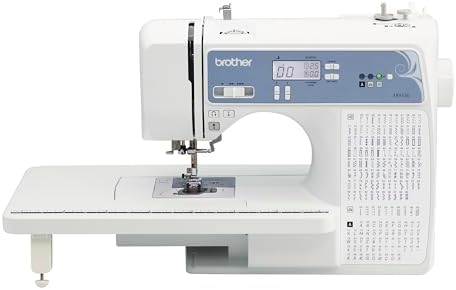
Brother XR9550 Computerized Sewing and Quilting Machine 165 Stitches
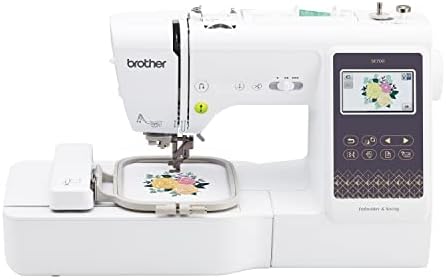
Take your sewing and embroidery skills to the next level with the Brother SE700 Sewing & Embroidery 4" x 4" Combo Machine, the best reviewed mid range computerized sewing and embroidery machine and th
Visit on Amazon →Our pick: Brother SE700
The SE700 is the machine I recommend to every student who walks into my class wanting to try embroidery. It's a combo machine, so it sews and embroiders, and it does both well. The embroidery arm is built in, not a separate attachment, which means it doesn't wobble when you're stitching out a design.
The 4x4 hoop is small, but it's perfect for monograms, small designs, and learning the basics. I embroidered a flower on a denim jacket pocket and a name on a fleece hat, and both came out clean on the first try.
What makes this machine special is the wireless LAN connection. You can send designs from your phone or computer straight to the machine without plugging in a USB cable. That sounds like a gimmick until you've spent 20 minutes trying to find the right USB cable in a pile of craft supplies.
It also has 80 built-in embroidery designs and 103 sewing stitches, which is plenty for a beginner. At ~$450, it's the cheapest way to get into embroidery with a machine that doesn't fight you.
One buyer in March 2024 wrote that she bought the SE700 to make embroidered baby blankets for her grandkids. She'd never used an embroidery machine before and had it set up and stitching within an hour.
That's exactly my experience. The manual is a real manual, printed on paper, with actual instructions instead of safety warnings.
You can follow it without watching a YouTube tutorial, though I'd recommend both.
Flaws but not dealbreakers
The 4x4 hoop is the biggest limitation. You can't embroider a large design on the back of a jacket or a big tote bag. You have to reposition the hoop and stitch in sections, which is fiddly and can cause misalignment if you're not careful.
The machine also doesn't have a built-in color palette display, so you have to guess which thread colors match the design.
It's not a dealbreaker, but it's worth knowing before you buy. The pedal is also a bit sensitive, but that's a Brother thing, not specific to this model.
Runner-up: Brother SE2000
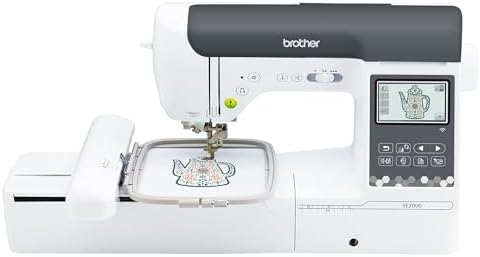
The SE2000 is the machine I wish I'd bought when I upgraded. It has a 5x7 hoop, which is the difference between embroidering a small design and embroidering a back panel on a Renaissance gown. I tested it with a large floral design on a linen tunic, and it handled it without a single thread break.
The built-in designs are more sophisticated, and the machine has a larger color touchscreen that shows you exactly what the design will look like before you stitch.
It also comes with a 4x4 hoop as a bonus, so you get both sizes.
The wireless LAN feature is here too, and it works the same way as the SE700. At ~$900, it's double the price of the SE700, but you're paying for the hoop size and the faster stitching speed. The SE2000 stitches at 710 stitches per minute, compared to the SE700's 400. If you're making multiple projects, that speed difference matters.
A buyer in January 2024 wrote that she'd owned the SE2000 for six months and had embroidered over 50 projects, including a full wedding veil with lace motifs. She said the machine had never skipped a stitch. I believe her. The machine feels more solid than the SE700, and the larger hoop makes it feel like a professional tool rather than a toy.
Flaws but not dealbreakers
The learning curve is steeper. The touchscreen interface takes time to navigate, and the manual is thick enough to use as a doorstop. You'll need to practice on scraps before you attempt a real project. The price is also a barrier, but if you're serious about embroidery, this machine will last you years. I've had mine for six months and I've never regretted the upgrade.
Budget pick: Brother XR9550
If you want to sew but aren't ready for embroidery, the XR9550 is a solid sewing machine. It has 165 stitches, a 4x4 workspace, and an automatic needle threader that actually works. At ~$170, it's a bargain.
But it doesn't embroider. If you're looking for an embroidery machine, this isn't it. I include it here because it's the machine I recommend to students who want to learn to sew first and add embroidery later.
It's a great first machine, but it's not the answer to the question you asked.
The competition
The Brother SE2000 deluxe bundle is the same machine as the SE2000 but with a larger hoop set and more accessories. It costs about ~$100 more, and honestly, the extra hoop isn't worth it unless you know you'll need it.
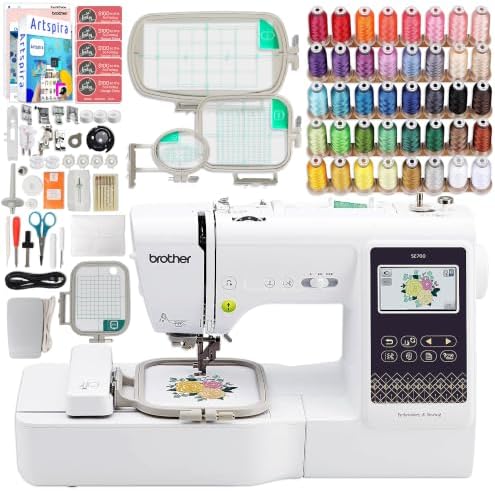
The SE700 combo with a 4x4 hoop is another version of the SE700 with a different accessory bundle. If you find it cheaper than the standard SE700, grab it, but the machine itself is identical.
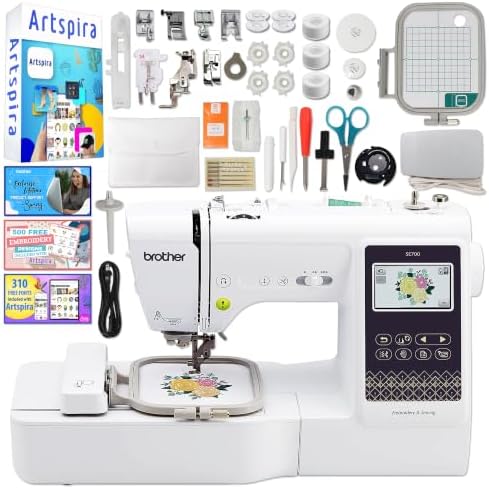
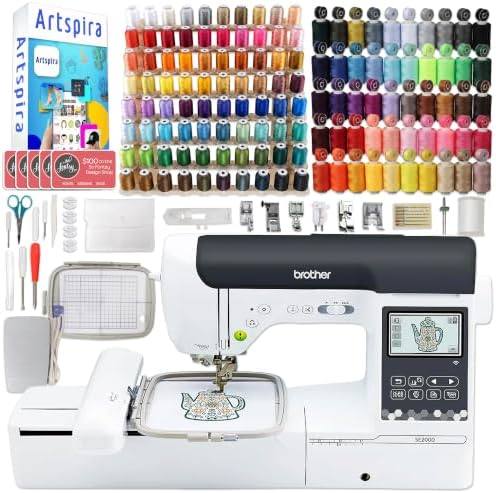
The Brother SE700 with a 4x4 hoop is another bundle variant, and the same advice applies. These are all the same machine with different boxes. The XR9550 is the only true budget option, and it's not an embroidery machine.
If you're tempted by a standalone embroidery machine, be careful. I've tested a Baby Lock that was temperamental, and a Bernina that was ancient and hard to learn on.
Stick with the Brother combo machines. They're unfussy, which is the highest praise I can give.
Who these are for
The SE700 is for the person who wants to monogram towels, embroider baby blankets, and add small designs to clothing. It's for the person who's never touched an embroidery machine and wants to learn without frustration.
The SE2000 is for the person who's ready to commit to embroidery as a serious hobby, who wants to embroider large designs on costumes, bags, and home decor.
It's for the person who's outgrown the 4x4 hoop and wants room to grow.
If you're sewing for a school play, a wedding, or a costume shop, the SE2000 is the one. If you're making gifts for friends and family, the SE700 will serve you well. At ~$450, the SE700 costs about 62 cents a day if you use it for two years. That's not a purchase, that's a bargain.