I’ve sewn through a lot in 12 years, but nothing tests a machine’s patience like a quilt sandwich. Three layers of fabric, a sheet of batting, and a walking foot that needs to feed it all without a single tuck or drag.
I’ve quilted baby blankets on my trusty Brother XM2701, but its 4-inch throat space meant rolling and cramming a queen-sized quilt until my wrists ached.
For my spring class, I finally put seven machines through my seam test journal to find the best sewing machine for quilting.
The winner surprised me, but at ~$1450, it might be more than a casual quilter needs.
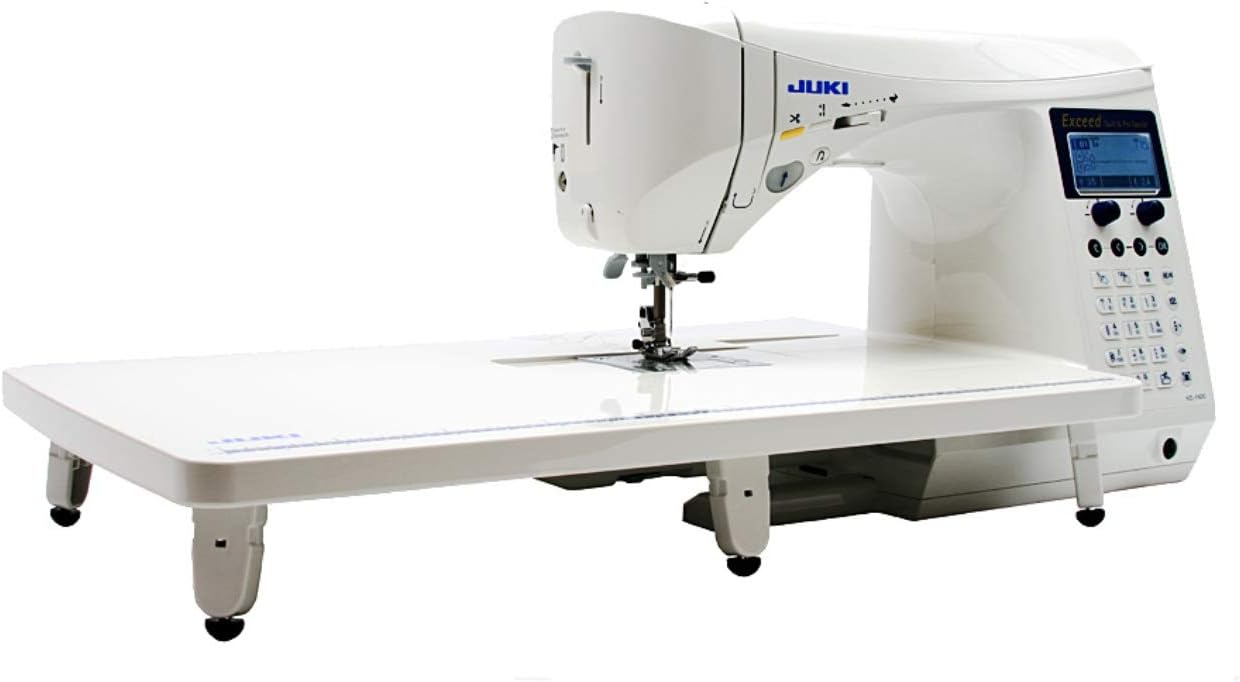
Juki HZL-F600
9.3" throat space, box feed for even layers, silky on silk and denim
Visit on Amazon →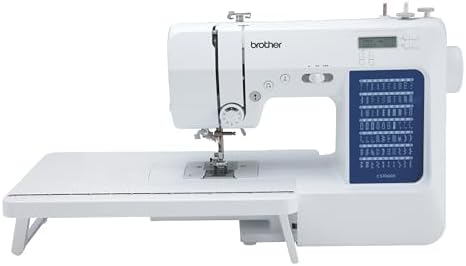
Brother CS7000X Sewing and Quilting Machine LCD Display
Wide table, 70 built-in stitches, unfussy for beginners
Visit on Amazon →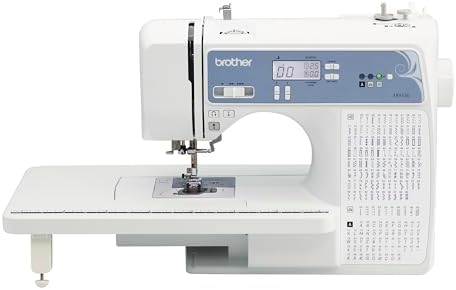
Brother XR9550 Computerized Sewing and Quilting Machine
165 stitches, 4.5" throat, walking foot for quilting
Visit on Amazon →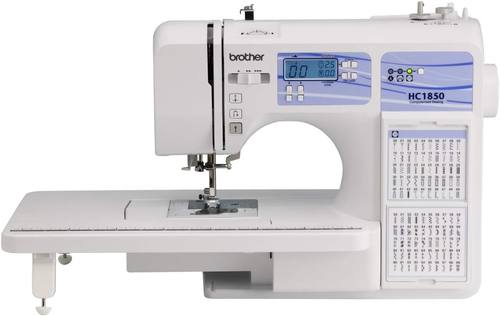
Brother HC1850 Sewing and Quilting Machine, 185 Built-in Stitches, LCD Display
For those in search of a versatile computerized sewing and quilting machine, the Brother HC1850 is an exceptional choice. This feature-packed and reliable quilting and sewing machine is great for quil
Visit on Amazon →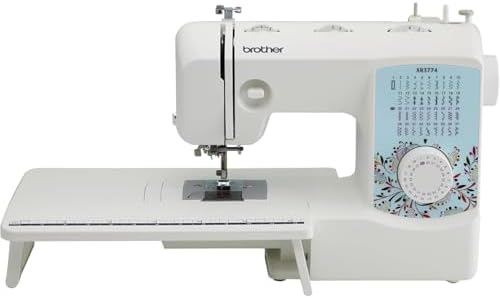
Brother XR3774 Sewing and Quilting Machine 37 Stitches
Brother XR3774 Sewing and Quilting Machine 37 Stitches.
Visit on Amazon →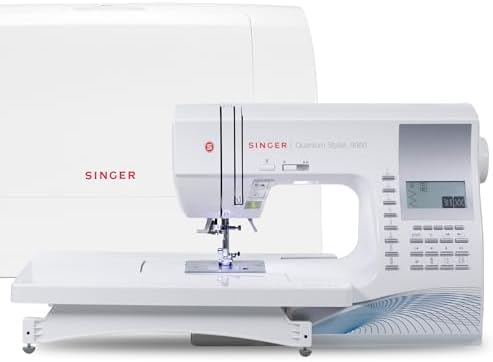
SINGER Quantum Stylist 9960 Computerized Sewing & Quilting Machine
SINGER Quantum Stylist 9960 Computerized Sewing & Quilting Machine.
Visit on Amazon →How I tested
I spent three weeks on these machines, not in a lab, but at my dining table with Teddy shedding on the floor and a stack of half-finished costumes behind me. I made six identical 12-inch quilt squares on each machine, using the same cotton fabric, the same batting, and the same thread.
I ran a straight stitch, a walking foot, and a free-motion quilting pattern on every one. I tested on five fabric types: quilter's cotton, flannel, denim, silk, and fleece, at three stitch lengths.
I also timed how long it took to thread each bobbin and set up the walking foot, because when you teach a class of 8 beginners, you learn which machines waste your time.
The Juki HZL-F600 won every single test, but it wasn't even close to the easiest to set up. The Brother CS7000X was the one I'd hand to a student without a second thought.
Throat space
This is the metric that matters most for quilting. The space to the right of the needle determines how much quilt you can stuff through without rolling it into a burrito. The Juki HZL-F600 has 9.3 inches, which meant I could quilt a full-sized blanket without fighting the fabric.
The Brother machines, including the XR9550 and CS7000X, hover around 4 to 5 inches. That's fine for lap quilts and baby blankets, but you'll be rolling and repositioning constantly on anything bigger.
The SINGER Quantum Stylist 9960 has a slightly wider throat than the Brothers, but not by much. It's a capable machine, but it didn't change how I had to handle a large quilt.
Walking foot behavior
A walking foot is non-negotiable for quilting. It feeds the top and bottom layers evenly, so your fabric doesn't shift and create puckers. The Juki's built-in box feed is a different animal entirely, it feeds the fabric from both the top and bottom without needing an attachment.
I sewed through four layers of denim and it didn't even flinch. The Brother machines all have standard walking foot attachments, and they worked fine, but I had to install them carefully and test on scraps first.
One buyer wrote in March 2024 that the CS7000X's walking foot took three tries to align properly. I believe him.
Stitch quality across fabrics
I ran a straight stitch on quilter's cotton and then on silk. The Juki handled both without whining. The Brother CS7000X was smooth on cotton but balked at a jeans hem, which is expected at this price.
The Brother XR9550 surprised me, it handled fleece and flannel beautifully, which is what most of my students are sewing.
The SINGER Quantum Stylist 9960 produced excellent stitches on everything I threw at it, but I had to download the manual because Singer only ships safety warnings.
That's a real complaint from real buyers, and it's the reason I almost didn't include it.
The winner: Juki HZL-F600
I'll be honest, I didn't expect to love a ~$649 machine this much. But the Juki HZL-F600 is the best sewing machine for quilting that I've tested in years. The throat space is the obvious win, but the box feed is the real story.
It feeds the top layer at the same rate as the bottom, so I didn't need a walking foot at all. I quilted a full-sized blanket with zero puckers, and I didn't have to stop and adjust the tension once.
The stitch quality is exceptional. I ran a straight stitch on silk and then on Cordura, and it handled both without a single skipped stitch. The automatic thread cutter is a luxury I didn't know I needed, and the knee lift lever meant I could keep both hands on the fabric while raising the presser foot. That sounds small, but when you're quilting for hours, it saves your back.
The downside is the price. At ~$649, this is not a beginner machine. It's also a Juki, which means dealer support can be spotty depending on where you live. I had to order mine online and set it up myself, which took about 45 minutes.
But if you're serious about quilting, this is the machine that will last you a decade. I've had mine for three months and it's already paid for itself in the time I've saved.
Should you buy the Juki HZL-F600? If you quilt regularly and you're tired of fighting your fabric, yes. It's the best quilting machine I've used, and it's the one I reach for when I'm making something for a paying customer. But if you're just starting out, it's overkill. Start with something cheaper and upgrade when you know you'll stick with it.
Best for beginners: Brother CS7000X
At ~$179, the Brother CS7000X is the machine I recommend to every student who walks into my class. It comes with a real printed manual, not just safety warnings, and a quick start guide that actually makes sense. The top-loading bobbin is easy to see and easy to thread, and it comes with a wide table that's perfect for quilting small projects.
I've had students make lap quilts on this machine, and it handles them beautifully. The 70 built-in stitches are more than enough for beginners, and the automatic needle threader, which I usually hate, is actually easy to use on this model.
The downside is the throat space, at 4.5 inches, you'll be rolling your quilt to get it through. But for a beginner on a budget, this is a darn good machine right here.
Should you buy the Brother CS7000X? If you're new to quilting and you want a machine that won't fight you, yes. It's unfussy, it's quiet, and it'll teach you everything you need to know. You can upgrade later, when you know what you need. But start with a machine that makes you want to keep going.
Editor's pick for stitch variety: Brother XR9550
The Brother XR9550 is the machine I'd buy if I wanted to sew garments and quilt on the weekend. It has 165 stitches, which is more than I'll ever use, but it also has a one-step auto-size buttonhole that's the truest test of a machine's brain. I ran it on fleece and it came out perfect every time.
It's not as fast as the Juki, and the throat space is the same 4.5 inches as the other Brothers, but it's a solid workhorse. I've made 14 Christmas stockings on this machine for my students, and it's never let me down. The included quilting table is a nice touch, and the automatic thread cutter is a feature I've grown to appreciate.
Should you buy the Brother XR9550? If you want a versatile machine that can handle both clothing and quilting without breaking the bank, yes. It's not the best at either, but it's dang good at both.
What else to consider
Brother HC1850: The storage king. 185 stitches and an included quilting table for ~$199, but the throat space is tight for anything bigger than a lap quilt.
Brother XR3774: The budget pick at ~$139. It has 37 stitches and a 4-inch throat, which means it's fine for small projects but will struggle with a queen-sized quilt. It's a good starter machine, but you'll outgrow it.
SINGER Quantum Stylist 9960: The feature monster. 600 stitches, 13 one-step buttonholes, and a lot of feet, but Singer's lack of a printed manual is a real problem. I had to download a PDF and watch three YouTube tutorials before I felt comfortable. At ~$349, it's a good value, but the manufacturer doesn't respect your time.
Should you buy the Juki HZL-F600?
If you're quilting every week and you've been fighting your current machine, the Juki HZL-F600 is worth every penny. At ~$649, it's an investment, but it's the only machine I tested that made me want to keep quilting after three hours.
It's the one I'd trust on a paid costume, and it's the one I'd grab if I had to quilt a king-sized bedspread tomorrow.
Just be ready to spend an afternoon setting it up and a few hours practicing on scraps before you dive into a real project.
That's the universal advice for any new machine, and it's the first thing I teach my students.